
Property sale and leaseback: raise cash without leaving your premises
Does your company own its premises? It can sell them, stay in place and collect the price to grow. Hyppo, as a broker, also shows you what a mortgage-backed loan would give, without selling anything.
Tailored study by an adviser

- You stay in your premises
- The value of your premises becomes cash
- Compared with a loan where you remain the owner
- Rates from 5%, indicative as at 9 November 2026
Your premises are worth money, but that money is sitting idle. With a sale and leaseback (cession-bail), your company sells its building to a lessor, which immediately leases it back. You collect the price, keep working in the same place, and can buy the premises back by exercising the purchase option.
Before selling, Hyppo shows you the other route: a mortgage-backed loan, where your company remains the owner.
Who is it for?
Your company owns its offices, its warehouse or its shop.
You need cash to grow, invest or repay debts.
You want to keep the use of your premises, without moving.
You are hesitating between sale and leaseback and mortgage refinancing.
Leasing applies to properties for business use. Proof of the use of funds is required.
Examples of sale and leaseback operations
Raising cash on your premises
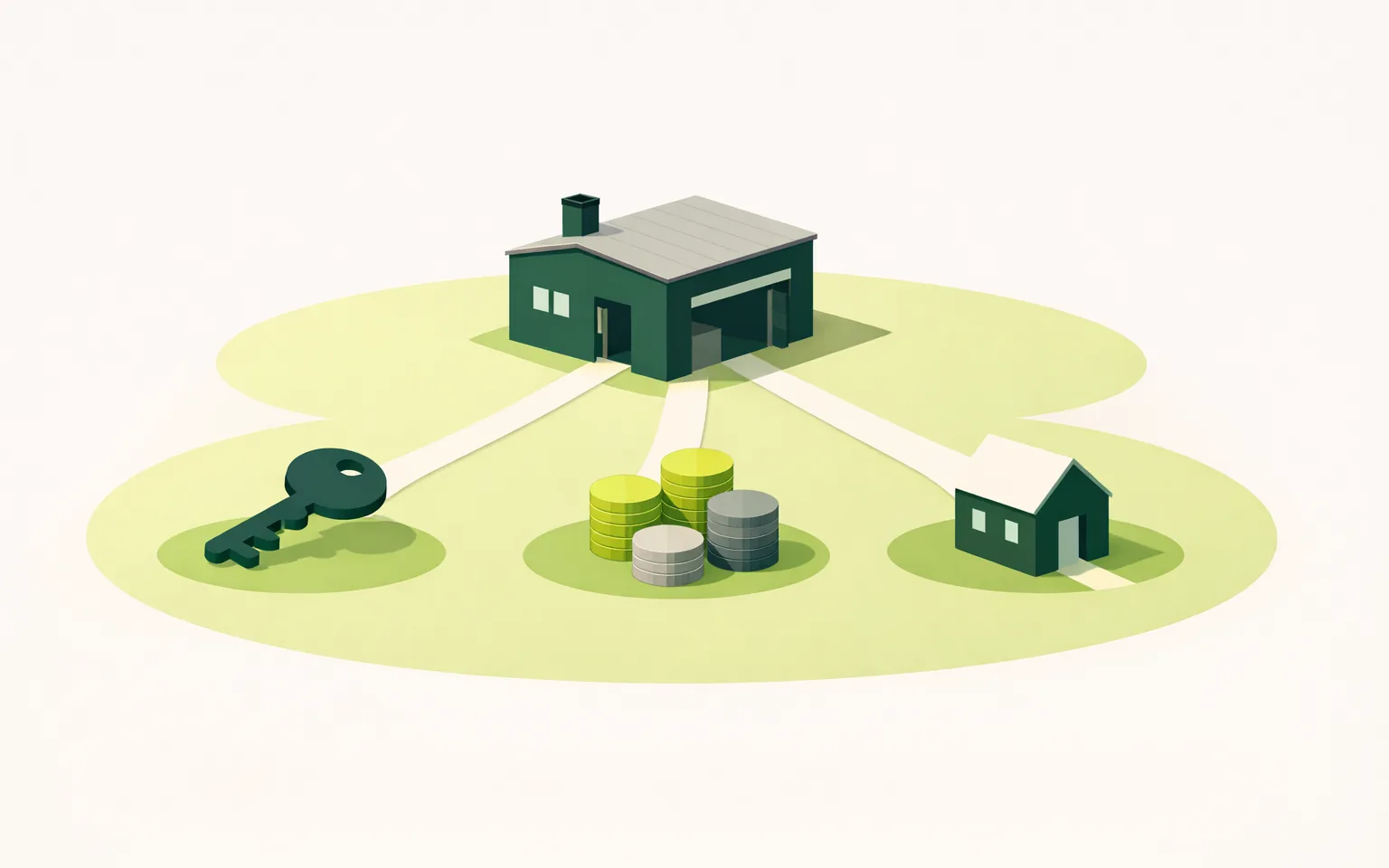
Your company sells the building it owns and keeps working there. The value of the premises becomes available cash.

Financing growth
The sale price finances an investment, an acquisition or the repayment of debts, without changing premises.

Sell and keep the use
The sale is signed at the notary's, with a lease that leaves you the premises and the option to buy them back.
What Hyppo does for you
- 01
Sell your premises or keep them as security: both routes compared, so you choose knowing the cost of each.
- 02
A file prepared with you: title deed, accounts, use of funds.
- 03
Proposals from lessors sought on your behalf.
- 04
A single point of contact through to the sale at the notary's and the signing of the lease.
How it works
You describe your project through the contact form, then tell us about the building and your need.
You send the title deed, the accounts and the intended use of funds.
The building is valued, and you receive the proposals, compared for you.
You sign the sale at the notary's and the lease, collect the price, and stay in your premises.

Why go through Hyppo for your sale and leaseback?
Sell or keep: you choose
Sell your premises or keep them as security for a loan: Hyppo presents both routes before you decide.
A file prepared with you
Title deed, accounts, use of funds: you know what to provide, and Hyppo takes care of presenting the operation.
Fees after release of funds
Hyppo's fees, from 1% to 6% of the amount financed, are due only once the funds are released.
A registered broker
Hyppo (REFI Technologies) is registered with ORIAS under number 23005573 as an intermediary in banking operations and payment services.
Frequently asked questions
Another question about your situation? A Hyppo adviser will answer.
What is the rate?
As a guide, as at 9 November 2026, financing starts from 5%, excluding insurance. The exact rate depends on the file, the term and the lender selected; it is set at review.
What is a property sale and leaseback?
It is also called cession-bail. The company sells a building it owns to a lessor, which immediately leases it back under a finance lease. It collects the sale price, keeps the use of the premises and can buy them back by exercising the purchase option.
Sale and leaseback or mortgage-backed loan: what is the difference?
With a mortgage-backed loan, the company remains the owner and gives its building as security; the loan can go up to 80% of its value. With a sale and leaseback, it sells the building and becomes the owner again only when the option is exercised. The sale also has a tax cost: have it calculated by your accountant.
What happens to the building at the end of the contract?
The company can exercise the purchase option and become the owner again, at the price set in the contract. If it does not, the lessor remains the owner of the building.
How much does Hyppo's support cost?
Hyppo's fees range from 1% to 6% of the amount financed and are due only after the funds are released. Arrangement and valuation fees remain at the borrower's expense.


