
Security trust (fiducie-sûreté): refinance your rental portfolio to reinvest
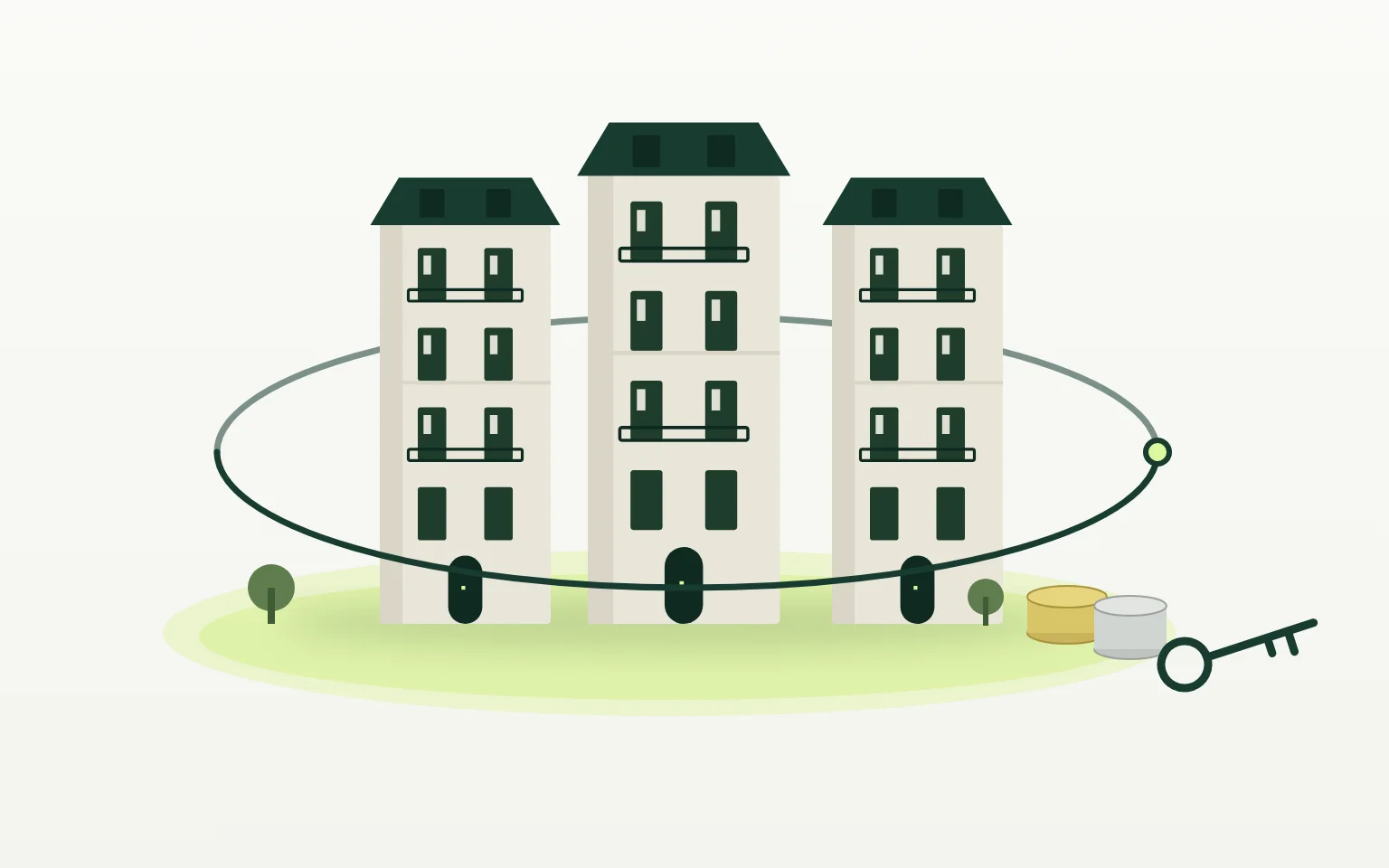
Your property company, SCI or holding company owns several let buildings, fully or partly paid off. A security trust brings them together to secure a single loan, from €1,500,000, and turns that value into cash for your next acquisition. You keep the management and the rent; the buildings return to you on repayment.
Tailored study by an adviser

- Several buildings, a single security agreement
- You keep the management and the rent
- From €1,500,000 of financing
- Rates from 4.5%, indicative as at 9 November 2026
A paid-off rental portfolio is a dormant cash reserve. To release it, a bank usually takes a mortgage, building by building. A security trust works differently: your company transfers ownership of one or more buildings to a trustee, who holds them in a separate estate for the term of the loan. You keep their use, management and rent by agreement, and the assets return to you once the loan is repaid.
For the lender, this is the strongest guarantee there is: it obtains the property or its price without repossession proceedings, at the value set by a valuer. That is what makes it possible to finance large amounts against a portfolio, rather than negotiating building by building. Hyppo is the service that structures this trust with you: it prepares your company's file, builds the structure and compares offers from more than 65 banks and partners. For a more conventional refinancing, see also our page refinancing a property company.
For which projects?
Acquire a new building or a portfolio, funding the deposit with your existing portfolio.
Renovate or reposition assets in the portfolio to let them better.
Upstream funds to the holding company or repay a shareholder current account.
Restructure the existing debt, bought out and consolidated into the new loan.
Hyppo considers a security trust from €1,500,000 of financing, for an SCI, a family SARL, a property company or a holding company, taxed under income tax or corporation tax. Residential, retail or office buildings; land is only accepted as additional collateral. Below this amount, Hyppo will rather seek a mortgage loan.
Examples of security trust refinancing

Funding the deposit for an acquisition
A property company places three paid-off buildings in trust to borrow the deposit for its next building. It keeps the portfolio's rent and gets the properties back on repayment.

Consolidating the portfolio's debt
A holding company buys out the existing loans on its buildings and consolidates them into a single financing, secured by a trust over the portfolio, to release cash.

Preparing future acquisitions
The contract provides for a reusable trust: the same portfolio then secures the financing of the next purchases, with no new security agreement.
What Hyppo does for you
- 01
An analysis of your portfolio: value of the buildings, rent, existing debt, and cash that can be released.
- 02
The right structure: security trust, mortgage or pledge of shares, amortising or interest-only, depending on the portfolio and the use of funds.
- 03
Several offers sought, compared and negotiated for you, with no investment or account transfer required in return.
- 04
A single point of contact, working with your accountant and your lawyer, through to the signing of the trust agreement and the loan.
How it works
You describe your portfolio and your project through the contact form, then talk it through with an adviser.
You send the company's documents: articles of association, accounts, leases, title deeds, amortisation schedules of existing loans.
The buildings are valued; you receive the offers, compared for you.
You sign the trust agreement and the loan, then receive the funds.

Why use Hyppo to refinance your property company?
The guarantee that suits your portfolio
Security trust, mortgage or pledge of shares: Hyppo proposes the structure that releases the most cash from your portfolio, at the best cost.
A company file built with you
Articles of association, accounts, leases, existing debt: you know what to provide, and Hyppo presents the transaction to lenders with your accountant and your lawyer.
Several offers, nothing required in return
Hyppo compares offers from several lenders, with no investment or account transfer required. Fees, from 1% to 6% of the amount financed, are only due once the funds have been released.
A registered intermediary
Hyppo (REFI Technologies) is registered with ORIAS under number 23005573 as an intermediary in banking operations and payment services.
Frequently asked questions
Another question about your situation? A Hyppo adviser will answer.
What is the rate?
As a guide, as at 9 November 2026, financing starts from 4.5%, excluding insurance. The exact rate depends on the file, the term and the lender selected; it is set at review.
Why a security trust rather than a mortgage on each building?
Because a single trust agreement can cover several buildings, whereas a mortgage is taken property by property. And because the guarantee is stronger for the lender: the assets form a separate estate, out of reach of your other creditors except in case of fraud, and the lender obtains the property or its price without repossession proceedings in the event of default. That strength can be negotiated, on the amount as well as the terms.
Does my property company keep the rent during the loan?
Yes, if the contract provides for it: a use agreement leaves you the use and management of the buildings, and therefore the leases and rent, for the entire term of the loan. The French Civil Code expressly provides for this for business property (article 2018-1).
Can the trust be reused for a future investment?
Yes, if the deed provides for it: the trust can be "reusable", meaning it can later be assigned to secure new debts (articles 2372-5 and 2488-5 of the French Civil Code). A portfolio already placed in trust can thus secure the financing of a further acquisition without a new contract.
What happens to the existing loans on the buildings?
A mortgaged building cannot be transferred into a trust without the existing lender's consent. In most structures, the existing debt is bought out and consolidated into the new loan, and the mortgages are released.
Who is the trustee, and what happens on repayment?
The law reserves this role for credit institutions, certain financial and insurance institutions, asset management companies and lawyers (article 2015 of the French Civil Code). The assets form a ring-fenced estate, protected from the trustee's own creditors. Once the loan is repaid, the trust ends and the buildings return to your company.
How much does Hyppo's support cost?
Hyppo's fees range from 1% to 6% of the amount financed and are only due once the funds have been released. Drafting the trust agreement, the trustee's fees, the valuation of the buildings and arrangement fees remain payable by the borrower.


